OM (ॐ) Cosa significa e perché recitare il mantra OM
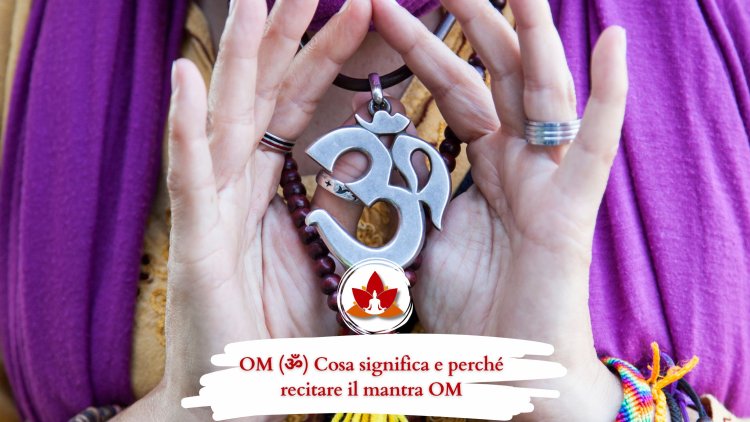
In a fast-paced, distracted world constantly filled with digital noise, there exists an ancient and sacred word that holds the key to profound inner peace and cosmic connection. That word is Om (or Aum) , a monosyllabic mantra whose vibration spans centuries of spiritual heritage in Hinduism, Buddhism, Jainism, and beyond.
More than a simple sound, Om is the primordial syllable of creation, the original vibration from which the entire cosmos originated. Chanting this simple yet powerful sound can be a profoundly transformative experience, capable of harmonizing the body, enlightening the mind, and elevating the spirit.
This article explores the profound meaning of Om and explains why this ancient and revered mantra continues to be a powerful tool for awareness and mindfulness even today.
The rich meaning of Om (Aum)
Although generally written as a single syllable, Om is composed of three fundamental sounds: A , U, and M. Each of these, together with the silence that follows them, represents a different aspect of consciousness and ultimate reality.
“ A ” (pronounced “ahh”): The first sound arises from the back of the throat and resonates in the abdomen. It represents the waking state ( jagrat ), the awareness of the material world we perceive through the senses. It is the most concrete and physical aspect of our existence. On a cosmic level, it symbolizes the creation of the world with Brahma , the creator.
“ U ” (pronounced “uuh”): As the sound moves forward, toward the palate, it becomes “uuh” and vibrates in the chest and throat. It represents the dream state ( swapna ), an inward-looking consciousness that perceives thoughts, emotions, and the subtle world. It is associated with Vishnu , the preserver of the universe.
“ M ” (heard as “mmm”): Closing the lips produces this last sound, which vibrates in the nasal cavities and the crown of the head. It symbolizes the state of deep, unconscious sleep ( sushupti ), in which the mind is calm and silent. It is connected to Shiva , the law of change and dissolution.
The Silent Pause (Turiya): The most important, yet least emphasized, aspect of chanting Om is the silence that follows. This silence represents the fourth state of pure and uncontaminated consciousness, transcending the other three. It is the supreme reality—infinite, blissful, and beyond rational comprehension. It is the point where we can encounter our true Self, eternal and immutable.
The sacred symbol of Om graphically illustrates these four states. The three curves represent the states of waking, dreaming, and deep sleep. The upper dot indicates the state of the absolute (turiya), while the semicircle below the dot represents maya, or illusion—the obstacle that prevents us from reaching higher consciousness.
Contenuti correlati:- 100 + 100 Hour Hybrid Yoga Training TTC
Why recite the mantra Om?
Chanting Om is not simply a religious ritual, but a practice that transcends all beliefs and has scientifically proven benefits for our physical, mental and spiritual well-being.
Mental and emotional benefits
Due to the hectic lifestyle of modern times, many of us are plagued by anxiety, stress, and an overactive mind. Reciting the Om mantra is a simple and effective solution.
Reduces anxiety and stress: The vibration produced during chanting calms the nervous system, reducing stress hormone levels and inducing a state of deep relaxation. It has been shown to promote healthy brain activity, particularly alpha and theta waves , which are associated with reduced anxiety.
Improves concentration and focus: By concentrating on the vibration and sound of the mantra, the mind is anchored in the present, freeing itself from the constant flow of thoughts. This practice promotes mental clarity and improves concentration in all areas of life.
Promotes emotional stability: Chanting can be used as a therapeutic release for negative moods. Regular practice generates greater inner stability, calm, and optimism.
Physical benefits
The benefits of chanting Om are not limited to the mind, but also have a positive influence on the body.
Calms the nervous system: Chanting activates the parasympathetic nervous system, known as the "rest and digest" system. This slows the heart rate, stabilizes blood pressure, and optimizes overall bodily function.
Stimulates the vagus nerve: The calming vibration of the “ M ” sound stimulates the vagus nerve, responsible for regulating mood, digestion, and heart rate. Stimulating it helps the body enter a state of relaxation, promoting healing and resilience.
Opens the sinuses:
The vibrations generated by the sounds “ A ” and “ U ” during recitation help open and clear the sinuses, proving particularly beneficial for those suffering from respiratory disorders.
Spiritual benefits
In essence, chanting the Om mantra is a spiritual practice aimed at uniting the individual with universal consciousness.
Attune to cosmic energy: According to ancient texts and modern interpretations, Om represents the fundamental cosmic vibration. When chanted, one consciously harmonizes with the frequency of universal energy, experiencing a profound sense of unity and connection with the universe and all living beings.
Leads to Self-Realization: The ultimate goal of chanting Om is to achieve union of the individual soul ( Atman ) with the supreme reality ( Brahman ). This practice is a direct path to introspection and self-knowledge, allowing one to get in touch with one's inner Self and one's spiritual destiny.
Expands Meditation:
Om is an excellent tool for meditation, as it serves as a point of concentration to calm the active mind. As the chant evolves from sound to silence, it guides the meditator from the tangible world of the senses to the subtle state of pure consciousness.
How to recite Om?
Reciting the mantra Om is a simple practice, accessible to anyone and ideal to do every day.
-
Sit in a quiet place: Choose a quiet, well-ventilated space where you won't be disturbed.
-
Relax your posture: Assume a meditative position , such as sitting cross-legged on the floor, or in a chair, keeping your spine straight.
-
Breathe slowly: Close your eyes and take a few slow, steady breaths to relax.
-
Inhale and exhale: Inhale slowly through your nose. As you exhale, begin chanting “ Aum ” in an even tone: begin with the sound “ A ” in your abdomen, continue with the “U” in your chest, and end with the “ M ” in your nasal passages and head.
-
Feel the vibration: Bring your attention to the vibrations moving upward through your body. Feel the resonance and let it guide you into a state of deep relaxation.
-
Observe the silence: After the sound “ M ” fades, remain aware of the silence that follows the next breath. This is the moment of inner stillness.
-
Repeat:
Continue this process for a few minutes or as long as you feel comfortable. Five to 10 minutes is a good starting time for most practitioners.
Ti potrebbe piacere anche:- Corso 200 Ore Yoga Teacher Training Online
A sound for all ages
The wisdom contained in Om is as relevant today as it was thousands of years ago. Om invites us to remember that beneath the noise and stress of everyday life lies a profound and peaceful core.
Through this pure sound, we can connect with an energy that heals, calms, and connects us to something greater than ourselves.
As a meditation tool, a stress-release technique, or a path to spiritual awareness, chanting Om represents a universal and accessible means of finding harmony, clarity, and peace in a world so desperately needing it.
What's Your Reaction?